All posts by Caroline

Caroline is a Director at Digital Print Management, a leading print management company specialising in providing print and mailing solutions. Having spent 25 years in the transpromo industry she is one of the UK's leading expert's in print and mail solutions.

Top tips for choosing the right printing company


outsource print

How do you choose the right printing company?

Confronted with so many potential suppliers how do you decide which printing company to choose for your print requirements or how do you outsource your payslip printing?

How do you find the right service provider when there are so many to choose from?

Which one do you select and what selection criteria do you employ?

Until recently, companies did not pay much attention to the way they reviewed their print strategies and requirements. Little or no consideration for cost was given to the various print devices, paper, supplies, general print and consumables being ordered on a daily basis.

All that changed with the onset of the financial crisis.

Companies are more aware of the need to review their print requirements.

The biggest problem is that company executives or department heads have no idea how much it is really costing them to process, print and mail out a plethora of items each week.

They have no idea of the overall cost of their print bill, the quantity of supplies they get through in a week, the number of suppliers they are using and the time spent resolving hardware problems.

Money is wasted by the continued use of unnecessary devices, obsolete hardware, staff spending time on print and I.T issues resulting in hours being lost to dealing with different vendors and suppliers.

Many companies are now appreciating the benefit of an outsourced print service reducing the complexity of managing various suppliers and spiralling in-house costs and managing print and distribution in-house.

Outsourcing print whether to a print management services company see here or by adopting a managed print service here requires knowledge and understanding of what your organisation is trying to achieve.

Too often buyers focus on one thing only and that is PRICE.

Unfortunately choosing on price alone results in the customer being dissatisfied with the quality, service or the end product.

print outsourcing business documemts

Price should not be the only consideration when evaluating suppliers and/or vendors.

“We are buying on price only” or “we want the cheapest solution” are typical of the current climate.

The buyer can not expect a great quality product or service if he/she is buying on price alone.

To then add value to a service or product so the customer benefits becomes an impossible task.

Most companies don’t want the hassle of sourcing suppliers to manage their print, payroll or billing few know where to start looking or what considerations need to be taken into account when outsourcing.

Print is the end product – from printed payslips and invoices, cheques, direct mail to the use of MFPD’s multi-functional print devices managed in-house, all deliver paper in some shape or format and not many companies are equipped to research and employ print services that will save them money.

What is happening in the market place?

It is a print buyers haven, assuming they have the knowledge to purchase print or skills to outsource the required business function.

Print management companies, print suppliers/consumables, vendors and manufacturers are desperate to win work at any cost and the buyer can get what they want at a price they are prepared to pay.

Companies seeking these services are going to market lacking the skills required to source the right partner to work with.

Print checklist20 point checklist of tips to think about before choosing your print supplier

Before you even consider the following list you need to think about the services you require?

Have an approval criteria or list of what you are looking for notably:-

Are you wanting to outsource all your corporate print from letter-headings to billing and payslip printing? (Print Management)

Are you looking to reduce the number of print devices and print in-house (Managed Print Services)

Are you looking to reduce the cost of one specific area of print such as your billing or cheque and payment processing?

Once you know what it is you are trying to achieve then the following list will provide a useful guideline, it is by no means complete or exhaustive.

1. Choose a company that can offer innovative solutions capable of adapting to your business environment.

2. That can/will provide ongoing support, consultation and recommendations that take into account your evolving business needs.

3. That has a complete solution for your requirements i.e if you are outsourcing your payslip printing you might want to adopt multi-channel distribution that includes printing and sending them electronically.

4. Offers best in class service and delivery, experienced personnel, good operational processes and protocols particularly if you are outsourcing cheque printing. 

5. Check the quality of the work – what do they do, what is their niche and how will they deliver the service to you.

6. Technically competent – will the incumbent supplier be able to deliver what they say they can?

7. Is the proposed supplier financially stable?

8. Is the supplier reliable – will they fulfil/deliver the product/service in a timely manner?

9. Are they enthusiastic – can they demonstrate the extent of their knowledge of the product or service they are proposing?

10. Does the structure of the company indicate reliability and longevity in other words they aren’t going to disappear in 6 months time.print checklist
11. Do they have experienced personnel capable of advising beyond printing for example print management companies do more than just manage your print they are multi-channel partners they can provide expertise on direct marketing, SMS, data management, social media and promotional gift items.

12. Do ask for case studies and testimonials from current customers to authenticate the suppliers statements.

13. Don’t make your decision solely on price – cheap prices mean inferior quality and service.

14. Ask as many questions as possible no matter how trivial to ensure you are confident in the future service.

15. Establish what other services the supplier can provide this is useful for any future business/company developments you might have. For example they might provide direct marketing print and design capability or can advise you on your social media marketing strategy.

16. Visit the site or manufacturing premises – is it secure if printing cheques and payslips? If it’s a managed print solution ask to visit a managed site to establish how it works or request a reference site to discuss how the company are benefiting from MPS (managed print service)

17. Check the reputation of the supplier – ask for a client list and check the website what do they talk about, what services are they advertising?

18. Ask for a trial run for example can the print company offer to print some basic items free of charge? If it’s an outsource service such as payslip printing ask the supplier if they are able to take a data file and provide a print out for a minimum fee so you experience the service first hand.

19. Use social media to see how your supplier engages with its audience. Do they offer expert advice and help in the form of great content, are they on all the social media networks?

20. Be loyal to your print provider or outsource partner. Once you have found the right printing company or partner keep them. Having a good relationship will ensure you can look to them for all manner of printed or outsourced information and advice and in turn they are more likely to offer you discounts, give you a first class service and provide additional services.

Are there any criteria you would use in addition to the above?

How did you find your print partner and how successful has the relationship been?

Digital Print Management can be found on twitter, facebook and Pinterest, connect with us on Linkedin and Google+.




Print outsourcing business documents

Print outsourcing business documents

Managing and understanding your document flow will imrpove business processes

Every organisation public or private, education or charity faces the ever growing challenges of how to manage the printing and document processes in their work place.

Documents inflow or outflow, hard copy or electronic are the life blood of many organisations.

You only have to walk through office buildings to see the extent of document use its related workflow and how they are the embodiment of our everyday lives.

A document that’s been printed, a glossy brochure presented to a customer, even a business card, the document remains the formal method of business communication between employees, teams and customers.

Without any of this information the continuity of your business would cease to function.

Therefore the value of adding control to the print flow is paramount in ensuring continuity of your business.

Any business document outsourcing strategy needs to be well thought out.

Some questions to consider:-

1. How are your business processes affected by information and document management?

A document process forms a business process. By understanding the life cycle of a document for example, how does it enter the building via fax, email or mail then moves into the workflow of the business, is then processed and finally archived or sent back to suppliers or customers.

2. Where do you want your company or organisation to be in the next 3-5 years?

Do you want to improve core business processes?

Streamline and improve supplier payments (AP and AR) have a specific targeted marketing campaign, improve customer services?

If the answer is yes then you will need to prioritise your business documents.

print outsourcing business documemts

Outsourcing business documents – improve business efficiency


Invoice processing and billing is a key fundamental business process, without your invoices going out on time money wont be collected, suppliers will chase payment before the company has been paid, your business starts to falter.

Does marketing have the relevant collateral – corporate print, brochures, letter headings does it tell the same story or are there too many different documents with incorrect colours all relating a different story.

Are the corporate colours reflected across the company website?

These are primary examples of the importance of managing your business documents but you will need to engage on a deeper level to understand your document processes and how they move through the business process.

Print outsourcing business documents whether its customer sales letters, invoices, statements, remittances or marketing collateral can transform a paper laden business.

How?

outsource your printed business documentsOutsourcing business documents provides continuity and consistency of quality across the departments within your company because it increases customer retention, improves productivity and reduces operating costs by allowing your people to focus on your core business.

Outsourcing adds a greater range of services that you wouldn’t have had previously because the supplier providing the printing and mailing service can offer advice on how best to deliver content and maximise the use of white space.

Making the case for outsourcing some or all of these documents couldn’t be easier here’s why?

  1. Improved cash flow – seasonal fluctuations, staff absences,  I.T. failures can all impact your invoice printing which impacts your cash flow
  2. Improved customer service – communicating with your customers regularly with content that is correct has never been more important. Making sure the documents they receive are accurate relevant and on time increases the longevity of retaining your customer
  3. Reducing paper wastage a contentious issue for many businesses but by outsourcing critical business documents and using mail merge facilities and document verification on all mailings ensures that documents are consolidated into one envelope
  4. Reduce cost by improving competitiveness of the organisation through more efficient I.T and business systems, specialist knowledge, streamlining business processes resulting in your staff  engaged in core business activities rather than mundane document generation which is easy to outsource.

Outsourcing printed business documents can incorporate multi-channel distribution of all your documents some of which can be printed and mailed, the rest electronically sent to the recipient. To learn more about how this could work for you click here.

If you print personalised transactional business documents – invoices, statements, reminders, appointment letters then talk to us about print outsourcing. You can print all of the above and more using our print-2-mail service click here for more details without leaving your desk, its easy.

Find us on twitter, facebook and Pinterest. Connect with us on Linkedin and Google+ for all our updates and news.


Print media. Why print still has longevity?

Is print really dead?

Is print really dead?

Recently I wrote about how print fits comfortably into the media mix.

Many businesses are under the illusion that print is a dying media and that they should be engaging with customers on social media platforms for their promotional marketing.

There is some truth to this but the consumer still trusts and believes in print. The reality is that the consumer feels comforted by print because there is the trust element in a leaflet or a brochure to look at before making that all important purchasing decision, buying a car or making a monetary investment.

If newspapers are losing their status as a primary medium for reading the news then why has Warren Buffett, owner of 60 newspaper titles and Jeff Bezos founder of Amazon who recently acquired The Washington Post buying traditional media?

The answer I believe is simple the consumer likes to read the printed word. They prefer to read the news from their daily newspaper or, if evaluating a product they are considering purchasing to read from the brochure or leaflet.

Not everyone has the desire to read the news online on a computer. There is something gratifying about buying your favourite newspaper and reading it at selected times during the day during your commute or last thing before turning the lights out.

With print there is a start and an end, a newspaper has a front and back page, a printed direct mail piece will have a unique selling point or offer with a distinct call to action if produced correctly, the web has no end or beginning but is a continuum encouraging you to click through from one article to another related article, the reader flirts with the web but a newspaper or promotional leaflet is more tactile, more implicit because it is paper based.

A simple illustration of this is the company newsletter which exemplifies the importance of communicating internal issues with its employees, it is a tangible document and more appealing than an e-newsletter.

Print media has a certain cachet it adds credibility to a specific event or situation more so than the online version.

The internet has changed publishing business models and people continue to read magazines and newspapers for the gratification of reading it in print.

There is a revolution taking place in the print world but with careful strategic marketing and cross media personalisation print is the catalyst that engages the audience offline and then takes the audience online through social platforms.

The key is content and design, the adage that content is king does ring true, people want to read good quality relevant content but not at the expense of having their inboxes cluttered to over filling point.

Content that is devised by marketers who haven’t personalised the content to suit their targeted audience.

The power of social media can not be underestimated when compared to the printed word.

Attending a wedding a couple of years ago, on line newsI was the first to read on twitter that Amy Winehouse had died. This information quickly spread as I shared the news with the guests at the table.

News items mean more when in the printed form because print adds gravitas rather than reading it in less than 140 characters. It is real, more passe than seeing images on instagram or facebook. What makes social media unique is its virality, when a news item breaks it goes viral but it might take eight hours to see that news item in print.

Online news is fast and convenient but print still has its advantages and has its place in our digital world.

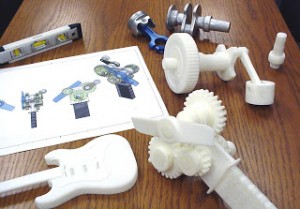
Look at the development of 3D printing, established this decade and used extensively by motor and manufacturing industries.

Offices still create a paper flow, you need to file paper (if you don’t use a document scanning system) A4 files digitally printed with your company logo are a perfect example of the use of print.

Consumers like to flick through a brochure or promotional leaflet before making that all important buying decision and the purchaser has a higher chance of being influenced by promotional material.

How can the physical and digital world meet when engaging with potential buyers?

The answer is to use both mediums to affect audience participation.

A direct mail marketing piece can be the first touch point for audience engagement from off line to an online medium.

Using digital media to complement print campaigns ensures that those who view online and offline receive targeted campaigns relevant to them.

Print will continue to have its place in the media universe.

I personally won’t believe print is dead until I see it in writing! (Anon)

Is print dead or does it form part of the bigger picture when used with social media?

Is or should print be the first touch point when engaging with customers?

Let me know what you think?

Follow us on twitter, facebook and Pinterest you can also find us on Linkedin and Google+ Please subscribe via email to receive our updates in to your inbox.


Print, digital and the cross media marketing mix.

on line news

The 1990’s saw the emergence of the digital print era and it was widely believed in print circles at least that the doomsday bell would toll for more traditional forms of print.

Jump forward 20+ years and print is alive and holding its own.

Before the cynics in my audience go ah yes but…

Print circulation of newspapers and magazines is down but there is good news.

More than 96% of newspapers are still read in paper format rather than on line. (City University London)

Digital print and paper can and do co-exist.

The newspaper publishing group News UK proved how by employing print and cross media marketing effectively can enhance the readers experience with on-line availability.

Readers of the printed newspaper “The Sun” collect codes from a newspaper that gives them on-going access to the Sun’s online, mobile and tablet content plus user benefits. The variable QR codes are printed inside the newspapers.

This is nothing new.

Retailers have been using variable personalisation and QR codes on printed leaflets, bus shelter advertising and even the underground advertising hoardings show variable QR codes encouraging audiences to move from one medium to the next.

Each touch point builds and promotes the experience and engagement with the consumer teasing them to move on to the next platform

In what is cross media marketing and what does it have to do with print I talked about the diversification of print and how used innovately in conjunction with a co-ordinated marketing campaign print can still hold its own within the digital on-line arena. on line news

Most newspapers accept the fact that their printed readership circulations are on the decline.

Using innovative marketing methods News UK are encouraging their readership to buy the printed version of the newspaper and then use it interactively with a mobile device enabling their readership to enjoy both mediums rather than giving up on the physical newspaper and solely pushing the on line version.

It is a clever use of cross media marketing and if the audience doesn’t buy the printed version because the content isn’t right for them they have the option to view it on line.

Print/paper and digital work well together the difference is the ability to produce highly personalised and variable information targeting key audiences using paper and social media combined. Ink on paper will continue to remain a vital component in cross media marketing integrating print with smart devices.

Although print can be constrained by space, using an app that enables the reader to scan a page containing embedded digital watermarks lifts the consumer experience by giving them additional information about products

Print is long lasting and durable while the internet is very much a temporary medium often the messaging gets lost in cyber space.

Print is and does need to work harder to hold its audience if used in conjunction with a specifically targeted cross media campaign can be highly effective in delivering its message.

digital on line newsThe new social media generation of 14 -15 year olds are referred to as the ‘on-line generation’ with an attention span of less than a minute so marketing messages have to be quick and subliminal to ensure the message is loud and clear.

Print on paper still has a place in the media sphere.

The media might have us believe that we want to be communicated via ipads, smart phones and tablet devices but many of us want to be talked to in different ways and through different channels.

Print and digital should not be seen in opposition to each other but rather in synchronisation with each other.

The print versus digital debate has continued unabated since the 1990’s and today the industry is still coming to terms with how to fully integrate digital, social media and print and social media channels effectively.

Developing unique highly personalised and variable codes is enabling News UK to create bespoke content and images for every newspaper copy.

Imagine a highly personalised variable printed or online newspaper tailored specifically for your reading needs?

Ink on paper is and will continue to remain a vital part of the cross media mix making it effective is a case of how well the processes are integrated to make it affordable and accessible for the consumer.

(Based on an original article that first appeared in PrintWeek)

What do you think?

Is paper and print dead or can it work with its digital counterparts?

Keep up to date with our latest news by following us on twitter, facebook, Pinterest and connect with us on Linkedin and Google+.

Sign up to receive our updates by dropping your email address in to the box so you get our latest news.


Cheque printing. Why cheques could get a new lease of life

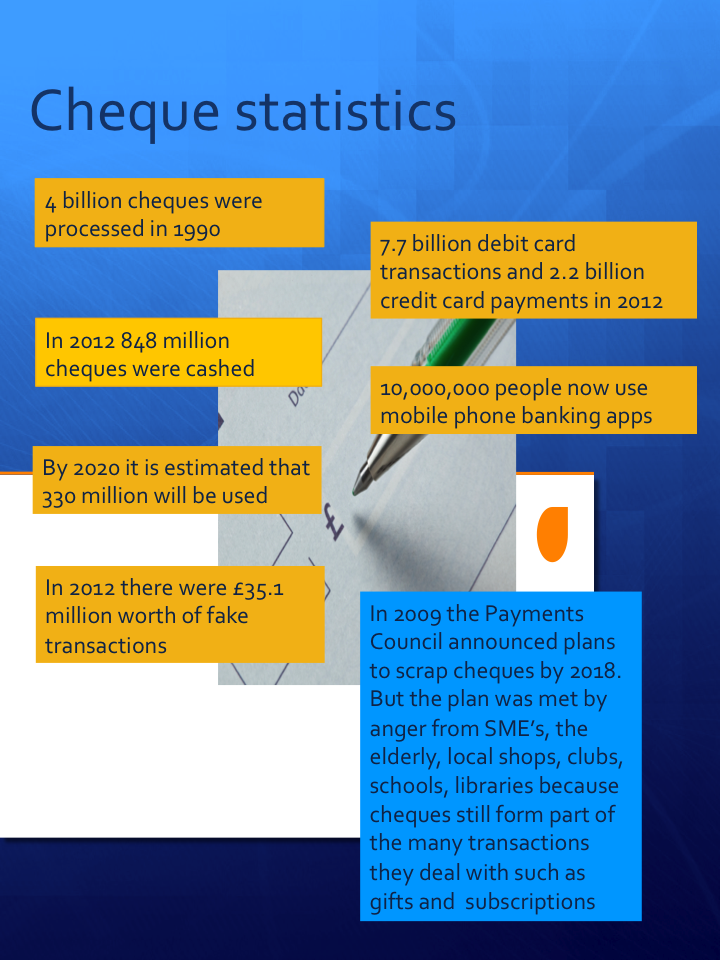
cheque scanningWhen I first wrote about cheques and cheque printing and why I felt they were still important for business there was understandably much antipathy.

Many businesses and organisations rely on bacs and chaps payments so why the need for cheques?

Haven’t they become extinct?

Not yet.

They are getting a new lease of life only a year or so after the banks tried to relinquish them.

Big high street names are working on a solution to make cheques easier to process by being able to scan them and send the details electronically.

By developing smartphone apps, local shops, schools and individuals will be able to cash in cheque payments.

The proposed scheme could significantly reduce fraud and costs incurred by the banks.

Moreover the lifespan of the cheque which is due for review in 2018 could be scrapped giving the cheque a longer lease of life.

Electronic cheque processing or cheque imaging is a new development for the UK but not so in the USA, France, India, China and Asia.

The industry body Cheque and Credit Clearing Company are keen to look at different ways of improving cheque clearing that will sustain cheques long passed 2018 and for as long as they are required.

This is good news for many customers as it would decrease the time taken to process cheques and enable the consumer to use cheques for as long as they want to. cheques

Using the current system, when cheques are processed, details are checked by hand but an electronic system would allow the payee to pay the cheque in at the bank branch where it would be auto-scanned and the image then sent to the bank which issued it.

The details and signature would be verified by a computer system.

But the future is imaging technology apps developed by banks for use on smartphones giving the consumer or SME’s the option of scanning the cheque details using mobile phones or tablet device.

In theory you would scan the cheque, transfer the image to your bank and have it paid in to your account sitting at your desk or at home.

The original paper cheque would be kept as a record in case there are any payment issues or the payment didn’t show in the bank account.

The imaging process would not only make the process secure but speed up the cheque clearing process to 48 hours.

Under the present cheque clearing system it takes two days for someone cashing in a cheque to start earning interest, four days before they can withdraw the funds and six days before the money is guaranteed as theirs.

cheque printing

Banks don’t like cheques because they are expensive and time consuming to process. They are also a very easy target for fraudsters.

Plans to do away with cheques by 2018 by the payments council had to be scrapped due to a consumer and business outcry. The council said that an alternative paper based payment would be provided.

In 2010 banks planned to dispense with the issuing of cheque guarantee cards which protected payments up to the value of £250.00.

Many petrol stations and major high street retailers stopped accepting cheques in this year and in 2011 the payments council decided that the plans to scrap cheques would be scrapped until such times as a viable alternative could be offered.

Introducing an electronic system of processing cheques would be a major advantage for businesses but it would require changes in legislation because the Bills of exchange Act and the Cheques Act give banks the legal right to decide whether or not to honour a physical cheque.

Electronic processing would also include postal orders, bankers drafts and dividend cheques.

Cheques would be written in much the same way but the receiver would be able to scan the cheque create an image and electronically forward the details to the bank speeding up the entire cheque process reducing the banks and consumers time and enabling cheques to continue to play an important and worthy role for businesses, associations and consumers.

[Adapted from an original article first seen in the Daily Mail – August 2013]

Please follow DPM on twitter, facebook and Pinterest or connect with us on google+ and Linkedin.


What is marketing personalisation and what does it have to do with social media?

Personalisation

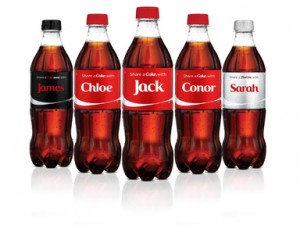
You cant have failed to notice Coca Cola’s ‘Share a coke’ summer campaign which is a great modern example of marketing personalisation.

Coke replaced the iconic brand with 250 most popular british names.

To ensure that marketing personalisation is targeted it has to be customised and personalised whether personalisation is attributed to direct mail, billing, social media personalisation is the key to engaging with your audience and customers.

We are over loaded with marketing messages subliminally and consciously but how do you cut through the ever increasing noise and get your message heard?

You personalise your product or service to suit the audience that the message is intended for.

Coke’s campaign was designed to create a huge buzz and engage its audience throughout the world and it has succeeded in doing that as people take to social media platforms with images of their personalised bottle.

personalisation

What is the difference between marketing personalisation and customisation?

There are two types of one to one marketing: personalisation and customisation

Personalisation occurs when the company decides what marketing mix is required for an individual this is based on previously collected data.

A perfect example of this is Amazon.com personalised recommendations that display as pop ups when you log in showing suggestions of purchases you might like to make based on your previous purchase history.

Customisation is where the customer specifies one or more elements of his or her marketing mix. An example of this is Dell Computers giving the customer the option to customise the computer they order.

Sending out unpersonalised messages doesn’t engage your audience by personalising the campaign whether it is direct mail, email marketing, social media, billing you are more likely to engage a response from your customers.

96% of organisations believe that personalised marketing improves response rates and personalised emails improve click through rates by 14% and conversion rates by 10% [Hubspot].

Irrespective of the statistics customer letters, invoices both paper and electronic, direct mail, email newsletters are being posted out unpersonalised this is a missed opportunity for further engagement with the customer.

Why is data so important? 

brand and personalisation

Making your brand personalised to your audience increases customer engagement.

According to the DMA [Direct Marketing Association] consumer willingness to share data with brands has increased dramatically over the past 18 months. Over 50% of the 1,193 UK adults that took part in in a survey for the DMA/fast.map data tracking report were willing to provide basic information about themselves – name, address and email to receive marketing messages.

Equifax one of the UK’s leading data providers believes that the rise in consumer confidence in sharing data is the increased transparency in privacy policies and improving practices to secure trust.

Major brands such as Unilever are ensuring their privacy policies are communicated better so that customers understand how their data is being used and 43% state that a clear easily understood data privacy policy would encourage them to share their data compared to one in three 18 months ago. Research has also proven that the better the data privacy protection policy is worded the permission to market rate can be improved by as much as 100% with the best notices reducing opt out rates by as much as 10%.

Personalisation

How does personalisation add value to my marketing?

What is the point of marketing personalisation?

Engagement with customers is all about data and never has it been more important than to understand consumers habits and what drives their behaviour to buy.

Purchasing data, social media, customer service interactions and web searches are all the essential components needed to drive customers to purchase.

Ensuring that your database is kept up to date gives a valuable insight in to customers behaviour influencing how you target your specific audience and/or market.

UK Office Direct is good example of managing their customer database when orders are placed on the site it offers similar products which may be cheaper or, more expensive but the point is you are given a choice of products and associated accessories.

This form of collaborative filtering determines appropriate recommendations for
the consumer ensuring that you are made aware of all available products and accessories.

UK Office invoices which are sent electronically contain variable personalised data hi-lighting various up and coming offers, products and accessories that the consumer might be interested in the foreseeable future.

It is clever personalised and strategic marketing because each invoice they email out is highly targeted and specific to the recipient.

The more a business knows about its customer the more it can tailor the buying experience by delivering targeted and relevant content.

Like amazon, a regular visitor to a specific website starts to receive a more personalised experience because the company recommends products and services that may be of interest based on the data the customer has previously entered making  the chance of click through rates significantly higher.

A more customised experience determined by consumer habits will drive conversion rates and encourage visitors to spend more. By being able to have instant access to the products they like with little effort they will respond by spending more money or by returning to the website.

The more personalised their experience is the more they are likely to share it.

Content is king

The more relevant the page the visitor lands on the more likely it will convert in to a sale. By understanding who is visiting the website, mobile site or app will ensure companies can be target specific and retarget customers with offers that make the whole buying experience relevant.

What next?

The new wave of inbound marketing is focussed on ‘personalisation’ and it is not just B2C but will focus on B2B.

By creating a more personalised experience for prospects and customers that delivers solutions to their individual problems, interests, needs and wants will positively reinforce people coming back.

How does marketing personalisation fit in with print?

Variable data printing lead the way with personalisation and the concept of personalisation is not new.

Printing variable data invoices, statements, council tax books and bills were some of the original paper based applications that were highly personalised and customised to the individual.

This form of personalisation has tripped over into the cross media marketing mix. [Cross media marketing] where marketing campaigns can include a PURL, in lay mans terms the PURL is a link that takes you to a website via a QR code or barcode that you scan with your smart phone.

web traffic and personalisation

Good content = increased web traffic = more sales

Content and personalisation has always and will always be king. Good content coupled with a unique and personal buying experience will drive customers to visit your website which is ultimately what we want.

What do you think?

How do you use personalisation in your marketing strategy?

What has worked for you and what didn’t?

Share with us your experience.

You can follow us on twitter, facebook and pinterest and connect with us on linkedin and google+ for updates. Please do because we like to share.

What is cross media marketing and how does it fit in with paper?

Cross media marketing and print

Cross media marketing what is it and where does it fit in with social media and print?

What is cross media marketing and what does it means for businesses seeking new customers and a greater audience?

“Cross-media marketing refers to the use of two or more media types print, email, mobile and/or social in an orchestrated campaign targeting demographic and/or psychgraphic segment. These campaigns can be retention programs targeted at existing customers or acquisition programs targeted at prospective customers. A cross media campaign delivers relevant content and a call to action through multiple media simultaneously as an integrated campaign”[Source: Infotrends]

At first hand there is an assumption that cross media means simply sending the same marketing message across all types of media from social media, multi-media platforms and the ubiquitous bit of paper.

But it is really much more than that. In fact arguably paper as a medium has been at the forefront of this cross media revolution for longer than you might think.

Think of direct mail marketing and the various calls to action that can be found on the piece.

Leaflets distributed in magazines and newspapers.

TV, radio and print ads, the focal point of this is cross media marketing or a form of communication with the buyer.

Cross media seeks to establish an interaction between the various types of media elements, to engage, to interact and to encourage the customer to interact with you and the company.

Communications have changed in the last decade and print is no longer the overriding medium used to communicate with the customer but it still has an integral role to play in the process of marketing your services and products.

What makes cross media distinct from its other siblings is its ability to “interact” on line.

Unlike paper, which is intrinsically valuable to hold and touch, you can’t interact with paper in the same way as you can on social media platforms.

Paper still offers value and in a co-ordinated marketing campaign can be used very effectively with social media channels.

There are more channels of communication through to the customer than there were five to seven years ago – the internet, mobiles, smartphones, tablets, email, social media all are instant and results can be measured to provide a deeper understanding of the customer making the interaction highly personalised and specific.

cross media marketing

In contrast a direct mail piece arrives on your doorstep and the consumer might read it if the headline is captivating and the call to action is convincing enough for him to take the next step – make a free phone call, fill in and send back, whatever the call to action is at that moment, the customer interaction may well become irrelevant in a matter of minutes, unlike social media where interaction is here, now and very relevant.

cross media marketingHaving a dialogue on line with a customer or prospect produces results that are defined and measurable.

What makes a campaign become a cross media campaign is how the responses are funnelled into a single data collection point which in turn iniates the first step in dialogue with the customer.

The interaction is the key feature here how to continue and maintain that dialogue with the prospect and convert them in to a paying customer.

Cross media marketing can include variable laser/data printing, PURL’s (personalised URL’s) video web podcasts/webinars, email campaigns and social media.

Variable data print can include a direct mail piece with a printed PURL on paper which then directs the reader back to electronic communication – the internet via a QR code which can be scanned with a smartphone.

Posters, brochures, leaflets anything that can be highly personalised with the customers name, company and a content specific message make the customer interation highly personalised and individualised.

And although print media might be losing out to its social media counterpart it still retains a unique yet visible position in the cross media marketing mix.

Using paper in a strategically defined and structured cross media marketing plan – in other words being clear on the offer to the consumer, having a clear market strategy and focus and providing convincing calls to action will move the audience or customer across the various media channels enhancing their experience and encouraging them to move to the next platform.

An example might be a Pizza restaurant giving away leaflets with a QR code which when scanned takes the audience to a PURL which allows them to enter a unique and highly personalised code printed on the leaflet, which in turn offers a 2 for one pizza on the next visit and then takes them to a social media channel where they can register, like or subscribe for free cinema tickets.

Each touch point builds on the experience and engagement with the customer teasing them to move on to the next platform.

Using a PURL motivates the audience to provide more personalised information about their needs and interests because it feels personal to them.

PURL’s used in conjunction with cross media platforms provide actionable data and intelligence on the audience you are seeking to engage with. Because the message is more personalised and customer centric moving your audience to the relevant social platform where you can continue the social conversation and hopefully maintain an on-going relationship

By collecting and understanding what to do with the data determines what the next call to action should be in your on-going dialogue with the customer. More importantly it is a fundamental part in measuring your ROI (return on the investment spent in/on your media campaign)

Finally, where does cross media fit in with print?

Digital printing is helping companies to capitalise on cross media by being able to produce variable short runs at low cost where every piece of paper can be unique to the individual. Print is tactile, secure, reliable and isn’t so intrusive as social media can be.

What makes print and cross media so effective is its ability to link to electronic media successfully.

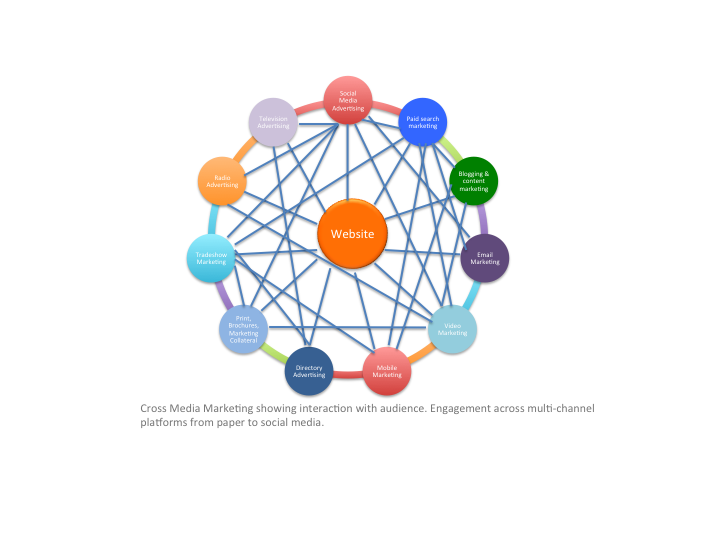
Your entire marketing mix is inter-connected and inter-related working toward driving traffic toward the website generating leads for your business with the intent to provide sales and business.

How does your cross media marketing campaign work for you? Are you doing this already? Is cross media marketing just another fancy term used for what we already do in social media?

What do you think? Please share your view with us below.

Coming next week: The Power of Personalisation

To subscribe to our updates please leave us your email address. You can find us on twitter, facebook connect with us on linkedin, google+ and Pinterest. 

What is 3D Printing?

3D Printing

Will 3D printing change the world we live in?

If anyone was in any way uncertain of 3D printing, they probably aren’t now.

The world’s first gun made with 3D printer technology was made available on line and within hours its blueprints had been downloaded over 100,000 times. [Source: Forbes]

The controversy and security surrounding the production of the 3D gun made by a Texan based company I’m sure will be deliberated long in to the month of May.

But what many people don’t know is “what is 3D printing?”

What is 3D printing?

Additive manufacturing or 3D printing is a process of making a three-dimensional solid object of virtually any shape from a digital model. 3D printing is achieved using an additive process where successive layers of material are laid down until the entire object is complete. [Source: wikipedia]

Imagine a gateau cake, instead of the customary 3 layers, each layer would be laid down systematically one at a time until the gateau is formed and looks like a gateau. In a nutshell that is 3D printing.

How does it work?

A 3D printed object starts with a digital computer aided design or CAD for short created using a 3D modelling program or scanned into a 3D modelling program using a 3D scanner.

The software program preps the digital file by slicing the design into hundreds or even thousands of horizontal layers and provides instructions in 3D printer language so that the printer can read the file to create each layer identically to the specification of the object required. As each layer is created they blend together with no visible layering creating a three dimensional object.

Will 3D printing become mainstream?

Many people have yet to hear or understand what 3D printing is and what it is capable of creating. Yet despite its seemingly newness to the world of media and print, the process associated with 3D printing has been around for decades.

Manufacturers have used the printers in the design process to create prototypes in traditional manufacturing.

3D started initially in the aerospace and automotive industry making prototypes and more recently its been coveted by surgeons for replacement bones. Some companies are using 3D printers for short run or custom manufacturing of bespoke objects.

Fast 3D printers costing thousands aren’t quite mainstream yet but with technological improvements it will get faster and become readily available as the price of 3D printers goes down.

The technology certainly has the capacity to affect industry and our personal lives.

Medicine is already making advances in bioprinters capable of reproducing human tissue for pharmaceutical testing its far reaching developments have already lead to entire organs and bones being reconstructed.

Research director at Gartner Pete Basiliere said” 3D printing is a technology accelerating to mainstream adoption. The hype leads many people to think the technology is some years away, when it is available now and affordable to most organisations. In three years a high quality 3D printer could got less than £1,500.00″.

3D printing

3D printing can create any object in 3D, from replacement body parts to a pair of shoes.

But who will want to own a 3D printer and what do you intend to make with it?

Is 3D printing likely to be available from high street copy shops and is that where the public will go if they need a new door knob or a washing machine part? Taking a downloaded file of the object that you require to be 3D printed and call in to your local copy shop to get the replacement part?

The implications for this technology are far reaching. More importantly what are the limitations to what can be made using 3D technology? After all if a company can manufacture a blueprint design for a gun could the next thing be a WMD (weapon of mass destruction)?

Its likely to be a good ten maybe even twenty years before we see home ownership of 3D printers on a mass scale.

Even if you make your own replacement gizmo you still need the means to fit the part. Take a ball cock if you’re not a plumber you might find it difficult to fit it without the expertise of a plumber.

3D printing will have to become a technology that will enhance our home place and improve it, in much the same way as tablets and smart phones that have and still do fulfil a human need, 3D printing will have to offer the consumer something we don’t have presently.

And I dont see myself anytime soon becoming a purveyor of objects and figurines for my home.

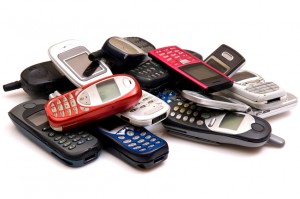
Mobile phones

Old mobile phones. But look how technology has moved on in just 5 years.

It is undoubtedly a technology capable of creating useful objects but the technology has future ramifications that are likely to be far reaching and as yet unknown with potential effects on the environment, waste and energy use.

Like any new technology if there is consumer need then this will drive it’s momentum and its use.

The introduction and mainstream use of such a technology when the consumer is ready for it will change the world as we know it and then we will wonder how we ever managed with out it in our lives.

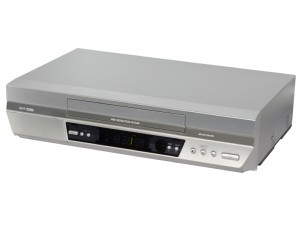
VCR

Remember this?


As did the mobile phone and the VCR!

What do you think? A technology that society will benefit from or another fad?


For all your updates you can follow us on twitter, facebook and pinterest. Connect with us on Linkedin and Google+

Invoice processing – from paper to e-invoicing solutions


Document capture software

Document capture software can improve the speed of your invoice processing and e-invoices can also be incorporated into the flow.

Are you still printing and scanning PDF invoices from your suppliers?

As of January 1st 2013 the European Union issued new legislation that states companies can now store invoices in the format they are sent.

Having a document capture solution allows you to have invoices sent by email to a specific email address where data capture software will automatically retrieve the email and attachments, read the data and input it into the same flow as your paper invoices. Reducing the time taken, reducing costs and eliminating human error by automating the process.

By removing the need to print the invoice and then scan the document you are cutting down on paper usage.

Encouraging suppliers to send e-invoices by email ensures the process is faster and cheaper.

So how does the document capture solution work?

Data capture software automatically imports email attachments such as invoices, order forms and applications straight into the capture software where information is then extracted and managed.

The software automatically detects any attachment – PDF, XML, TIF, PNG and transfers it to the data capture software. Incoming mail attachments can be approved in a matter of seconds and as each email is processed it is removed from the mail server and archived, there is no limit on the number of invoices or forms entering the system as removing from the server will ensure there is no overload.

Forms processing and Automation Invoice Processing

‘Forms’ captures and processes all types of forms in any format. The software reads handwritten text, machine print, barcodes, check boxes, circles, tables and matrixes.

Automatic forms processing is much faster than the manual keying of information it reduces time and money and the information is accurate.

Automated Document Processing

‘Documents’ automates the processing of incoming email to cut operational costs typically by a third. Staff aren’t tied up in laborious tasks of sifting, sorting, identifying and classifying mail items this task is automatically managed by the process. Any incoming paper mail is added to the scanner without any separator sheets  and the software sorts and classifies the documents. Any electronic documents are easily incorporated into the flow.

E-invoicing solutions

E-invoicing solutions can detect any attachment PDF, TIF, XML, PNG and transfer it to the data capture software

Automated import of email attachments

‘Collector’ automatically imports email attachments such as invoices, order forms and applications straight into the capture software where the information is then extracted and interpreted.

Collector detects any attachment PDF, XML, TIF, PNG and transfers it to ReadSoft’s© data capture software.

Statistics on your invoice processing

The web based ‘reporter’ helps you keep track of documents and costs and provides accurate real time information.

Document capture software enables automation of invoices received via email and the benefits include:-

A reduction in handling costs as there is no need to manually check incoming email attachments. As long as they arrive in the correct inbox they are opened and imported automatically

  1. The speed of invoice processing is increased because incoming invoices are automatically entered on to the system
  2. Improved control as email is sorted automatically and all sender information is retained
  3. The software enables capturing of text files, PDF, XML, TIF, PNG from email attachments
  4. Importing of emailed invoices into the system is seamless
  5. Easy set up
  6. Completely transparent
  7. Seamless integration with the majority of financial systems

For more information on how to automate your invoice processing and to implement an e-invoicing solution please fill in the contact form and one of our expert advisors will be touch.

For regular news and updates please subscribe. You can follow us on twitter, like us on facebook and connect with us on linkedin and google+ for all our updates.

Secure print tracking software and why organisations need it.

Integrated print management software ensures printed documents are secure and remain confidential.

Secure printing for any organisation is vitally important where sensitive information is concerned. Using secure print tracking software is essential in maintaining an organisations credibility.

Any breaches of the Data Protection Act of 1998 can lead to fines issued by the ICO (Information Commissioners Office).

Professional services companies and local government organisations are particularly susceptible where client data is concerned.

The days when reams of paper were left discarded at the printer should be long gone; leaving confidential information for anyone to pick up and read is careless in today’s office environment.

Sensitivity of data is paramount particularly in departments of local government such as childrens’ services who deal with sensitive data on a day to day basis.

Implementing a secure print management solution and secure network printing ensures that only the person who prints the information can collect and view it using user authentication.

Case study

For one City Council this proved to have a serious effect on the department and yet the situation could easily have been avoided. Two case workers who work with vulnerable children, printed reports to a shared network printer with no secure print software in place.

The first case worker was trying to print a report on child A but the device failed to print, the case worker left with the print job still in the print queue.

The second case worker then went to print a report on child B from the same device by which time the first case workers report had actually printed.

Both prints outs were collected by the second case worker who mistakenly and unknowingly picked up papers relating to child A.

As a consequence of this, the mother of child B was sent personal details of both child A and child B. This was reported to the ICO and the city council.

The mother of child A was also contacted by mother of child B and advised of this breach in confidentiality.

This incident happened because of human error; it wasn’t done intentionally but in this instance it caused embarrassment to the council. The incident was further compounded by the lack of secure print management software. The printing and despatch of sensitive data to clients did not include adequate checks.

Steps taken

As a direct result of the mis-management of information the council installed a new printing procedure requiring staff to enter an ID at the device before their documents can be printed and released.

Any documents which are not printed within twelve hours are auto-deleted from the print queue. This removes any unwanted print jobs from the system.

“Integrated print management software ensures printed documents are secure and remain confidential” 

Setting up print management software that networks printers and MFPs (multi-functional printers) is the the most effective way for safe guarding against print mis-management which can potentially lead to data protection breaches.

Print tracking software saves time and money and is the easiest way of avoiding data protection breaches.

Print tracking software saves time and money and is the easiest way of avoiding data protection breaches.

Benefits of print management software

  1. User authentication before the print job starts means that only authorised people can collect their finished print jobs
  2. By enforcing print rules, print jobs can be allocated to the most economical and efficient printer
  3. There is a potential print saving of up to 30% on print costs
  4. With an effective print management tracking solution in place, printed jobs are only printed when authorised reducing paper wastage and complementing a greener office policy

If you require more information on how setting up a secure print management solution or print tracking software can help your organisation save money, enhance confidentiality and reduce print costs then contact Digital Print Management on: 01234-271156.

You can follow us on twitter, facebook and connect with us on linkedin for regular updates and news.